
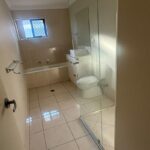
Bathrooms are one of the first rooms a property manager checks, and in a humid city like Brisbane they are also where mould and soap scum build up fastest. This guide covers the order to clean in and how to deal with the hardest jobs: shower screens, grout and silicone.
Quick answer
Ventilate the room, start high (exhaust fan, light, mirror) and work down. Treat mould in grout and silicone first so it has time to work, use a soap-scum remover on the shower screen, then clean the basin, vanity, toilet, floor and floor waste. Dry all glass and chrome to avoid water marks.
Work from top to bottom
- Exhaust fan. Remove the cover if it comes off easily, wash it and wipe the housing. Fans collect lint and dust and are often checked.
- Light fittings and ceiling corners. Remove cobwebs and wipe the fittings you can reach safely.
- Mirror and cabinet. Clean inside and outside the cabinet, then polish the mirror.
- Walls and tiles. Wipe tiled walls, especially around the shower and behind the toilet.
- Shower, bath and screen. See below.
- Vanity, basin and taps. Clean inside drawers and remove toothpaste marks and limescale from taps.
- Toilet. Clean the bowl, under the rim, the seat hinges, the cistern and the base where it meets the floor.
- Floor and floor waste. Mop, scrub the grout lines and clear hair from the floor waste.
Removing soap scum from shower screens
Soap scum is a mix of soap residue and minerals from water. Spray the screen with a soap-scum remover, or a mix of warm water, white vinegar and a little dishwashing liquid. Leave it for 10 to 15 minutes, scrub with a non-scratch pad, rinse, then dry with a squeegee and a microfibre cloth. For heavy build-up, repeat rather than scrubbing harder, which can scratch the glass.
Cleaning mould from grout and silicone
Open the window and turn on the fan before you start. Apply a mould remover to the affected grout and silicone and leave it for the time on the label. Scrub grout with a stiff brush, then rinse well. Never mix bleach-based products with vinegar or ammonia.
Mould that has grown deep into silicone often will not come out completely. If the silicone stays stained after cleaning, it may need replacing. That is a repair, not a cleaning job, so speak to your property manager. Our bond cleaning checklist explains how we handle tile, grout and mould staining.
Hard water and limescale on taps
Wrap a cloth soaked in white vinegar around the tap for 20 minutes, then wipe and polish. Do not leave acidic cleaners on natural stone surfaces.
Laundry while you are at it
The laundry is usually inspected alongside the bathroom. Clean the tub, taps, cupboards, the lint area of the dryer space, and the floor where the washing machine stood.
Frequently asked questions
Will a bond clean remove all mould?
Surface mould usually comes off. Mould that has penetrated silicone or porous grout can leave permanent staining, which may need re-sealing or replacing rather than cleaning.
Can I use bleach on grout?
A diluted mould remover is fine on most tiled grout. Test a small hidden area first, ventilate the room, and never mix it with other cleaners.
How do I stop the shower screen spotting again?
Squeegee the glass after the last shower before the inspection, and keep the window open or fan running.
Need a bond clean in Brisbane?
Free, no-obligation quotes for houses, apartments and units across Brisbane and Moreton Bay. Fully insured, police-checked cleaners and a 7-day free re-clean.