
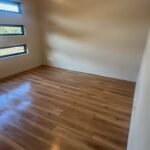
Floors are the last thing you clean and the first thing a property manager sees when they open the door. Dusty skirting, grey grout and sticky patches in front of the oven are easy for an agent to note on the exit report. Here is how to clean each type of floor properly, in the right order, without damaging it.
Quick answer
Clean floors last, after every other surface. Vacuum first, including edges and corners, then mop with a cleaner that suits the floor: a neutral cleaner for timber, vinyl and laminate, and a tile cleaner plus a scrubbing brush for grout. Use as little water as possible on timber and laminate, change your mop water often, and check under where the fridge and washing machine stood.
Work top to bottom, and do floors last
Dust and crumbs fall as you clean benchtops, cupboards, fans and window tracks. If you mop first, you will be mopping again. Finish every other job in a room, then do the floor, working from the far corner back towards the door so you never walk on a wet floor.
- Clear the floor. Remove rubbish, rugs, doormats and anything left behind.
- Vacuum or sweep thoroughly. Use a crevice tool along skirting boards, door tracks and corners, where agents often find dust and hair.
- Spot treat marks. Deal with sticky patches, scuffs and spills before you mop.
- Mop with the right cleaner for the floor type, using a well-wrung mop.
- Let it dry and check in daylight. Streaks and missed patches show up best with natural light across the floor.
Tiled floors and grout
Tiles are tough, but grout is porous and darkens with dirt, soap and mould. In kitchens, bathrooms and laundries, grout lines are one of the first things a property manager looks at.
- Vacuum the tiles, then mop with warm water and a tile floor cleaner.
- For dark grout, apply a grout cleaner, leave it for the time on the label, and scrub along the lines with a stiff brush. An old toothbrush works for corners.
- Rinse with clean water and dry with a microfibre cloth so dirty water does not settle back into the grout.
- In bathrooms, check the floor around the base of the toilet and the shower edge. See our bathroom bond cleaning guide for mould and soap scum.
Avoid mixing cleaning products, and test any strong cleaner on a small hidden area first. Some natural stone tiles can be etched by acidic products such as vinegar.
Timber and floating floors
Polished timber and engineered boards are common in Brisbane Queenslanders and newer apartments. Too much water can cause boards to swell or lift, so damp is fine, wet is not.
- Vacuum on a hard-floor setting, or use a soft broom, to avoid scratches.
- Mop with a cleaner made for timber floors and a well-wrung microfibre mop.
- Wipe up any puddles straight away, especially along board joins.
- Do not use steam mops, bleach or abrasive pads on timber unless the floor manufacturer says they are safe.
Vinyl, laminate and hybrid floors
These floors are easy to clean but show streaks. Use a neutral pH floor cleaner, a damp mop and clean water. For scuffs from furniture, a soft cloth with a small amount of cleaner usually lifts them. Avoid abrasive powders, which dull the surface.
Carpeted rooms
Vacuum carpets slowly in two directions, and use the crevice tool around the edges and under where furniture stood. If your lease asks for carpets to be professionally cleaned, book it as the last job, after the bond clean. Read more in our end of lease carpet cleaning guide.
The spots agents check
| Spot | What to look for |
|---|---|
| Where the fridge stood | Dust, crumbs and sticky marks under and behind it |
| Laundry, behind the washing machine | Lint, dust and water marks |
| Kitchen, in front of the oven | Grease spots and a sticky film |
| Skirting boards and corners | Dust, hair and cobwebs |
| Sliding door tracks | Dirt and grit in the runners |
| Bathroom grout | Dark lines and mould near the shower |
Our bond cleaning checklist includes vacuuming and mopping every hard floor, plus skirting boards and door tracks.
Frequently asked questions
Do I need to mop every floor for a bond clean?
Yes. All hard floors should be vacuumed and mopped, including the kitchen, bathrooms, laundry, hallways and any tiled or timber living areas. Carpeted rooms should be vacuumed thoroughly.
Can I use a steam mop on timber or laminate floors?
Check the floor manufacturer’s instructions first. Many timber and laminate floors can be damaged by steam and heat, so a damp microfibre mop with a suitable cleaner is the safer choice.
How do I get grout clean again?
Use a grout cleaner and a stiff brush, scrubbing along the grout lines, then rinse and dry. Very old or stained grout may not come back to its original colour, which may count as fair wear and tear.
Are floors included in a professional bond clean?
Yes. Our bond cleans include vacuuming and mopping all hard floors and vacuuming carpets. Carpet steam cleaning is a separate add-on from $80 per room.
Need a bond clean in Brisbane?
Free, no-obligation quotes for houses, apartments and units across Brisbane and Moreton Bay. Fully insured, police-checked cleaners and a 7-day free re-clean.